The statutory health insurance (GKV) savings law jeopardizes hospitals and thus also the implementation of the structural reform
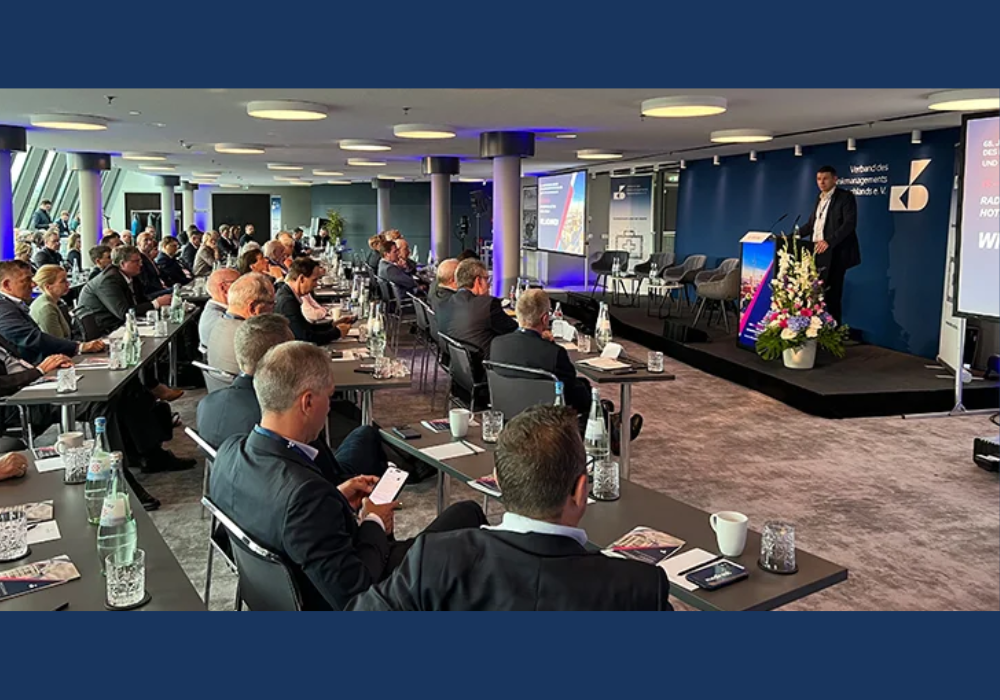
The challenges of hospital reform and their innovative solutions were the central theme of the 68th annual conference of the German Association of Hospital Management (VKD), which began yesterday with a comprehensive review of hospital policy. This future-oriented topic, however, was repeatedly overshadowed in the discussions by the cost-cutting measures of the planned statutory health insurance contribution rate stabilization law. This law, due to its anticipated impact on hospitals, and especially in combination with the elimination of the surcharge on invoices starting in November 2026, caused outrage among the approximately 135 participating executives. VKD President Dirk Köcher addressed this issue clearly in his opening speech: He stated that the legislature views hospitals in Germany as cost drivers. The opposite, he asserted, is true.
He described himself as a fundamentally positive person, but questioned how to approach the situation – even if the hospitals were certainly willing to accept the challenges. Dirk Köcher summarized the past few years to illustrate how the hospitals had arrived at this point. They were now in the midst of implementing the hospital reform. This reform had to be implemented, with all the uncertainties that still entailed. The austerity measures would only add to the uncertainty. Hospital sales were on the rise again, he noted. The diversity of ownership structures was at risk. "We will have a lot on our plate in 2027. The political response that there is no other way is not the right approach. We accept the challenges and are open to dialogue, but it would be good if we were also given the opportunity to save costs."
The reason for the current situation, he argues, is the political agenda that costs must be capped. This agenda fails to consider the simultaneous rise in hospital wages, energy costs, and modernization expenses, over which they have no control. Inflation in 2022 and 2023 has already created a cost-revenue gap of almost four percent. In his view, the proposed legislation would lead to a further reduction in revenue without any real countermeasures.
I gather that you are not thrilled.
In his welcoming address, Parliamentary State Secretary Tino Sorge of the Federal Ministry of Health explained that doing nothing was not an option. That would necessitate raising the supplementary contribution. "I understand you're not thrilled about this," he said. However, he explained that spending could only be based on revenue – plus structural measures, because the system was operating at a loss. The Hospital Reform Adjustment Act had softened some regulations, but the transformation fund for the Hospital Financing Act (KHVVG) was also a significant contribution. He acknowledged that the system suffered from excessive bureaucracy. They wanted to explore whether hospitals could be given more flexibility, for example, regarding minimum staffing levels for nursing staff. "So we need to discuss where flexibility and simplification of bureaucratic measures are possible." However, the hospital sector would not be removed from the law. Sorge then also addressed the "elephant in the room" – the financing of healthcare for recipients of basic income support primarily by those with statutory health insurance.
But due to the austerity measures in the federal budget, this is not a simple discussion. It will only proceed step by step. "We will not let up on this."
Health centers shape the quality of life
In a video message to participants, René Wilke, Brandenburg's new Minister of Health, explained that while they were concerned about the state of Brandenburg's hospitals, they remained hopeful that all locations could be preserved. Healthcare facilities have a significant impact on the people in the regions, shaping their quality of life. This presents a major challenge for managers and staff, who are under immense pressure. Security is currently eroding considerably in many areas. If we can assure people that they will continue to receive the care they need in this state, it will strengthen their trust in these institutions.
There will be significant cutbacks.
In the panel discussion, which included VKD President Dirk Köcher, DKG Chairman Dr. Gerald Gaß, VLK President PD Dr. Michael Weber, Dr. Christian von Klitzing, CEO of the Alexianer, and Dr. Jürgen Malzahn from the AOK Federal Association as a representative of the health insurance funds, the practitioners agreed that there would be significant cutbacks for the hospitals, even if changes were made to the law during the parliamentary process.
While the ongoing transformation of hospital structures places considerable demands on the management and staff of the clinics, these are being called into question by the GKV Stabilisation Act with its drastic revenue cuts.
The cost-cutting law designed to restructure the statutory health insurance system will drive most hospitals even further into the red, with all the associated consequences – most significantly impacting staffing, ongoing hospital reform projects, the implementation of planned service categories, and thus also state hospital planning. It was emphasized that ways must be found to maintain necessary structures and avoid jeopardizing hospital reform. Changes to the statutory health insurance cost-cutting law are therefore essential; otherwise, the situation will escalate further, predicted Dirk Köcher. If cost-cutting measures are to be implemented, they should ideally be combined with deregulation and cost reduction.
Dr. Gerald Gaß explained that hospitals are demonstrably not the cost drivers in the system. The German Hospital Federation's (DKG) task is to communicate what hospitals are truly facing, regardless of ownership. All are affected and are finding that despite considerable consolidation efforts, these are being undone. "It's not some unavoidable law of nature what's coming our way. If we had economic growth in Germany, Mr. Mahlzahn would have more money in the coffers – if the federal government were to reimburse the 12 billion euros for those receiving basic income support, we wouldn't have a deficit either. We are not responsible for the shortcomings in politics."
Question from moderator Andreas Tyzak, press spokesman of the VKD, to the representative of the health insurance funds: “Is the legal solution on the table going in the right direction?”
Dr. Jürgen Malzahn: “Of course, we as health insurance funds have a much easier time in this discussion than you do. As a system, we are not subject to insolvency. If the savings are insufficient, the supplementary contributions must be increased. There are no other options. However, he feels the federal states are lacking in their commitment to investment financing.”
Focus on resilience and AI
On the second day of the conference, speakers and participants are addressing questions of resilience to a wide range of threat scenarios – their global and local consequences. The blackout in Berlin in early January 2026, caused by an attack on the power supply, which affected several districts in the southwest of the capital and also several hospitals, served as an example of how crucial hospitals are in emergency situations and how they responded in this specific case. Bernd Quoß, CEO of Waldfriede Hospital, and Roy J. Noack, CEO of Immanuel Hospital, along with Helge Franz, Head of the Health Department in the responsible Senate Administration, will report on this. Dr. Martin C. Wolff, CEO of Kritis & Cyber, will discuss the importance of cybersecurity and the response to attacks.
Artificial intelligence has become highly relevant for hospitals and healthcare as a whole. What strategy might be the right one for hospitals? Keynote speaker Sanjay Sauldie, a recognized expert, concludes the conference with a discussion of this exciting option, which is already being used in many areas today.
On the afternoon of the first day of the conference, the 109th General Meeting of the VKD also took place. During this meeting, Andreas Schwab, Dr. Hanns-Diethard Voigt, and Ramon Krüger – the latter posthumously due to his exceptional service – were appointed honorary members as long-standing and dedicated members.
Original Press Release: This is a translated version of the original German press release. To view the original text, Click Here (German).
Image Credit: VKD